Kallen
Download

Guides

Why does my shoulder hurt when I lift my arm?

Reaching for a high shelf, the seatbelt or a bra clasp brings a pinch at the front or side of the shoulder, and lying on that side at night is uncomfortable. Most of the time this is the rotator cuff tendons working in too little space, and tendons get better with load, not with rest.

What it usually looks like

Pinch or ache at the front/side of the shoulder when reaching overhead, behind the back (seatbelt, bra clasp) or sleeping on that side. Often creeps in without a clear injury in people who sit rounded all day, sometimes after a sudden increase in pressing or overhead work.

Why it happens

Rounded-forward posture tips the shoulder blade so the cuff tendons work in a cramped space, and a weak mid-back leaves the small cuff muscles doing stabilization they were never sized for. Tendons hate two things: sudden spikes in load and chronic compression; desk life plus weekend volleyball delivers both.

Specifics

Clear answers and practical doses

Find specific answers about setup, dosage and timing, with the same numbers shown in the plan further down the page.

01

Which exercises help rotator cuff pain without making it worse?

Start by giving the tendons room. The protocol’s first phase is the doorway and lat stretches, the open book and a thoracic extension over a chair, 3 × 30 seconds daily, only into the stretch and never into the familiar pinch. After 1–3 weeks it moves on to loading: band rows, pull-aparts, prone Y-T-W and face pulls, 3 times a week, 2–3 sets of 12–15.

02

How much pain is acceptable during shoulder strengthening exercises?

A mild ache of up to 3/10 during the exercise is acceptable and normal in the loading phase. A sharp, familiar pinch is not the target. Tendons adapt to load, which is why the protocol keeps the arm working below the pain threshold instead of resting it completely.

03

When can I go back to push-ups and overhead training after shoulder pain?

Last, and gradually. In the third phase, incline push-ups come first and the incline is lowered every week; overhead work returns at the end, lightest first. The protocol puts real capacity at 8–12 weeks, and the mistake that restarts the clock is testing the shoulder with a heavy press in week 3.

When to see a professional

  • Sudden loss of strength after a fall or heavy pull; professional check promptly (tear needs different care).
  • Constant night pain with weight loss or feeling unwell; in-person check soon.
  • Numbness/tingling down to the hand; nerve assessment first.

These signs do not mean you must stop moving. Have them assessed in person and continue only with movement that is safe for you.

What you can do from today

  • Keep using the arm below the pain threshold; total rest stiffens and weakens the cuff further.
  • Sleep: avoid lying directly on the sore shoulder; hug a pillow to keep it neutral.
  • Temporarily trim the aggravator (overhead pressing, deep dips) instead of stopping all training.

In Kallen: turn on Reverse Sitting

Start a 25, 45 or 60-minute work block and let Kallen track the time. When it ends, Kallen draws one of 19 Mobility Snacks matched to the tight areas in your profile. Each takes 35–50 seconds; 10 can be done seated and the rest standing beside your desk. Then you return to work.

Your plan, phase by phase

This is how the protocol appears in the app. The coach adapts the pace and dosage to your measurements. You advance when you meet the phase criterion, not when a date arrives.

Phase 1 · 1-3 weeks

Calm + decompress

Goal

Give the tendons room: posture reset and gentle motion without the pinch

Dosage

Stretches 3x30s daily, only into stretch, never into the familiar pinch.

Move on when

Reaching forward and mid-height feels fine; the painful arc shrinks.

Exercises

Doorway Chest StretchWall Lat StretchOpen BookChair Thoracic Extension

Phase 2 · 3-6 weeks

Load the cuff

Goal

Progressive rotator-cuff and scapular strength; tendons adapt to load, not rest

Dosage

3x/week, 2-3 sets of 12-15, slow controlled reps; mild ache ≤3/10 during is acceptable and normal.

Move on when

Bands feel easy at full range; sleeping on the side is possible again.

Exercises

Band RowBand Pull-ApartProne Y-T-WBand Face Pull

Phase 3 · 3-6 weeks

Return to pressing

Goal

Rebuild pushing and overhead tolerance

Dosage

Incline pushups first, lower the incline weekly; overhead work returns last, lightest first.

Move on when

Full pushups and comfortable overhead reach without the pinch, two weeks running.

Exercises

Incline Push-UpPush-UpWall Angel

How long it takes

Tendon adaptation is honest but slow: expect first relief in 2-3 weeks, real capacity at 8-12 weeks. The mistake that restarts the clock is testing it with a heavy press in week 3.

Common questions

Is it a rotator cuff tear?

Shoulder pain that creeps in without a clear injury is usually not a tear. A sudden loss of strength after a fall or a heavy pull is different and needs a professional check promptly. Pain and stiffness in every direction that came on slowly is closer to a frozen shoulder, where professional guidance speeds things up.

Should I rest my shoulder completely?

No. Keep using the arm below the pain threshold: total rest stiffens and weakens the rotator cuff further. Trim the aggravator, such as overhead pressing or deep dips, instead of stopping all training.

How should I sleep with a painful shoulder?

Avoid lying directly on the sore shoulder, and hug a pillow to keep it in a neutral position. Night pain that comes with weight loss or feeling unwell is a different matter: see the warning signs on this page.

Check your own results

Measure your range of motion in Kallen, build your Movement Profile and follow the plan step by step.

Download Kallen
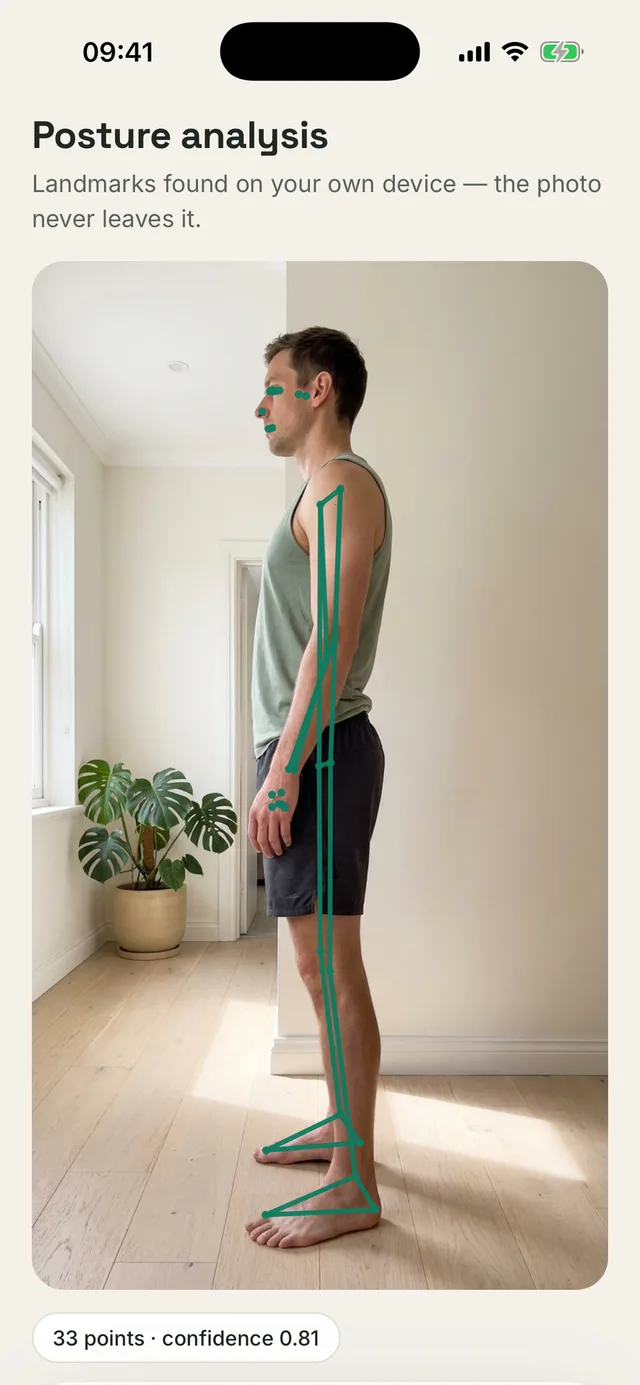
Kallen app screen: a side-on photo with 33 pose landmarks drawn over it and a confidence reading

Posture analysis · side