Kallen
Download

Guides

How to fix forward head posture on your own

In a photo from the side your ear sits clearly in front of your shoulder, and by evening your neck feels like a plank. Forward head posture is not a failure to “sit up straight”: some muscles are working constantly while others have nearly stopped joining in.

What it usually looks like

The head rides forward of the shoulder line; visible in side photos, posture scans or video calls; often paired with a rounded upper back and that end-of-day heavy-neck feeling. Users usually come for the look, the neck thanks them later.

Why it happens

Every inch the head drifts forward adds several pounds of effective load the neck extensors must hold; screens pull it forward for hours daily until the deep front-neck stabilizers switch off and the upper back stiffens into the slump. The head follows the upper back: fix the thoracic spine and the chin tuck stops being a fight.

Specifics

Clear answers and practical doses

Find specific answers about setup, dosage and timing, with the same numbers shown in the plan further down the page.

01

How many chin tucks a day does it take to fix forward head posture?

In the protocol’s first phase: 10 reps with a 5-second hold, 2–3 times a day, for 2–3 weeks. It is a gentle glide of the head straight back, making a “double chin”, not a jaw clench. The same cue at every red light or while the kettle boils adds tiny doses many times a day.

02

Why aren’t chin tucks working even though I do them every day?

Usually one of three things: the movement has turned into a jaw clench instead of a glide back, the screen and phone keep pulling the head down all day, or a stiff upper back is holding it there. That is why the protocol’s second phase frees the thoracic spine, with Wall Angels at 2 × 8–10, quality first. The neck feels lighter in 2–3 weeks; the change shows on photos at 8–12.

03

How do I track forward head posture progress when the mirror shows no difference?

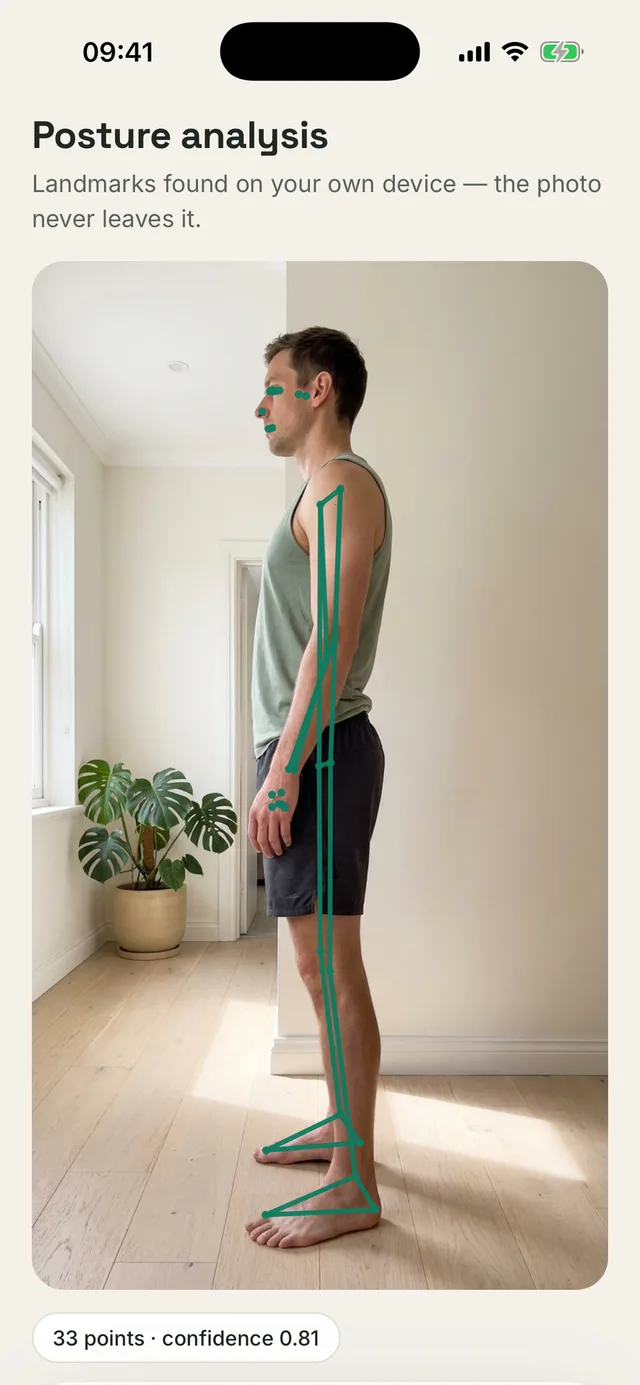
With a side photo once a month, in the same spot. It beats daily mirror checks, because alignment changes slowly and typically shows on photos after 8–12 weeks. Kallen’s side-on posture scan gives the head’s position relative to the shoulder line in degrees, so you compare numbers rather than impressions.

When to see a professional

  • Neck pain with arm numbness/tingling or dizziness; assessment first (see neck_pain_tech).
  • A head position that changed SUDDENLY or hurts to correct; get it checked.
  • Numbness or clumsiness in BOTH hands, dropping things, or a new unsteadiness when walking; professional assessment promptly (see neck_pain_tech).

These signs do not mean you must stop moving. Have them assessed in person and continue only with movement that is safe for you.

What you can do from today

  • Screen top at eye height, phone raised to eye level; posture follows the hardware.
  • The "gentle double chin" cue at every red light / kettle boil; tiny doses, many times.
  • A monthly side photo in the same spot beats daily mirror anxiety.

In Kallen: turn on Reverse Sitting

Start a 25, 45 or 60-minute work block and let Kallen track the time. When it ends, Kallen draws one of 19 Mobility Snacks matched to the tight areas in your profile. Each takes 35–50 seconds; 10 can be done seated and the rest standing beside your desk. Then you return to work.

Your plan, phase by phase

This is how the protocol appears in the app. The coach adapts the pace and dosage to your measurements. You advance when you meet the phase criterion, not when a date arrives.

Phase 1 · 2-3 weeks

Wake the deep stabilizers

Goal

Re-learn where neutral head position IS and release the overworkers

Dosage

Chin tucks 10x5s, 2-3x/day; gentle glide back, not a jaw clench; stretches 3x30s per side.

Move on when

The tucked position feels natural for minutes, not seconds.

Exercises

Chin TuckUpper Trap StretchLevator Scapulae Stretch

Phase 2 · 2-4 weeks

Free the upper back

Goal

Thoracic extension so the head has somewhere aligned to sit

Dosage

Daily short doses; wall angels quality-first, 2x8-10.

Move on when

Wall angels reach clearly higher; the slump takes effort instead of being the default.

Exercises

Chair Thoracic ExtensionWall AngelOpen Book

Phase 3 · 4-6 weeks

Build the frame

Goal

Mid-back strength that holds the new alignment for free

Dosage

2-3x/week, 2-3 sets of 12-15; squeeze the shoulder blades down and back, no shrugging.

Move on when

A side photo shows ear over shoulder; a full desk day no longer drags the head forward.

Exercises

Band Pull-ApartBand Face PullBand Row

How long it takes

Neck lightness improves in 2-3 weeks; the visible alignment change in photos typically lands at 8-12 weeks. Pair it with a posture re-scan monthly; this protocol photographs well.

Common questions

How do I check if I have forward head posture?

Stand with your back to a wall, heels about two inches out, buttocks and shoulder blades touching. If the back of your head will not reach the wall without tipping your chin up, your head sits forward of your shoulder line. It is the same test the app uses to track progress.

Can it be reversed as an adult?

Yes. Range of motion and muscular endurance change at any age. Among desk workers, a measurable improvement in the wall test within a few weeks is the norm rather than the exception. The goal is not to “stand straight” once; it is to make an upright position feel natural rather than tiring.

Is it the same as a dowager’s hump?

No. Forward head describes where your neck sits relative to your shoulders. A dowager’s hump is a prominence at the base of the neck, usually tied to a stiff upper back. The two often travel together, but they need somewhat different work.

Check your own results

Measure your range of motion in Kallen, build your Movement Profile and follow the plan step by step.

Download Kallen
Kallen app screen: a side-on photo with 33 pose landmarks drawn over it and a confidence reading

Posture analysis · side