Kallen
Download

Guides

How to fix tech neck on your own

The ache builds through the workday, turning your head to check a blind spot pulls, and weekends are noticeably better. It is the most common pattern among desk workers and one of the fastest to respond once the neck starts moving again during the day.

What it usually looks like

Neck and upper-shoulder ache that builds over the workday, stiff when turning the head (e.g. checking a blind spot), sometimes a heavy-head feeling. Screens, laptop or phone use make it worse; weekends often better.

Why it happens

Every inch the head drifts forward multiplies what the neck extensors and upper traps must hold; hours a day, every day. The deep neck flexors switch off, the upper traps overwork, and a stiff upper back forces the neck to do the turning the thoracic spine gave up on.

Specifics

Clear answers and practical doses

Find specific answers about setup, dosage and timing, with the same numbers shown in the plan further down the page.

01

What exercises for neck pain from computer work can I do at my desk, without a mat or changing clothes?

Three of the four exercises in the protocol’s first phase are done seated: Upper Trap Stretch and Levator Scapulae Stretch at 3 × 30 seconds per side, daily and never into sharp pain, plus Neck Rotations. Between them, 30 seconds of neck rotations every 45 minutes of screen work. In Kallen those breaks come from Reverse Sitting, with a Mobility Snack as the movement.

02

Does a laptop stand actually help neck pain, or is it just a gadget?

It helps, often more than the exercises do. Putting the top of the screen at eye height means a stand and an external keyboard for a laptop, and in the Kallen protocol that single change beats any exercise done twice a week, because it works through the whole workday rather than for a few minutes. Raise the phone to eye level instead of dropping your head to it.

03

Why is my neck worst in the late afternoon and fine at the weekend?

Because this is a loading pattern, not damage. The further the head drifts in front of the shoulders, the longer the neck extensors and upper trapezius have to hold it, hour after hour, while the deep neck flexors switch off. Away from the screen there is nothing to hold, so the ache quiets down. Relief usually starts within 1–2 weeks of daily micro-work.

When to see a professional

  • Arm pain with numbness, tingling or weakness that follows a line down the arm; professional assessment promptly.
  • Dizziness, vision changes or nausea tied to neck positions; get checked before loading the neck.
  • New neck pain after trauma (fall, collision); in-person check first.
  • Numbness or clumsiness in BOTH hands, dropping things, or a new unsteadiness when walking; professional assessment promptly (the spinal cord itself may be irritated).

These signs do not mean you must stop moving. Have them assessed in person and continue only with movement that is safe for you.

What you can do from today

  • Screen top at eye height; laptop users need a stand + external keyboard; this single change beats any exercise done twice a week.
  • Phone up to eye level instead of head down to the phone.
  • Micro-breaks: 30 seconds of neck rotations every 45 min of screen work.

In Kallen: turn on Reverse Sitting

Start a 25, 45 or 60-minute work block and let Kallen track the time. When it ends, Kallen draws one of 19 Mobility Snacks matched to the tight areas in your profile. Each takes 35–50 seconds; 10 can be done seated and the rest standing beside your desk. Then you return to work.

Your plan, phase by phase

This is how the protocol appears in the app. The coach adapts the pace and dosage to your measurements. You advance when you meet the phase criterion, not when a date arrives.

Phase 1 · 1-2 weeks

Release the overworkers

Goal

Ease the muscles doing double duty and restore comfortable rotation

Dosage

Gentle daily doses; stretches 3x30s per side. Never stretch into sharp pain.

Move on when

Head turns near-symmetrically without pulling; end-of-day ache noticeably milder.

Exercises

Neck RotationsUpper Trap StretchLevator Scapulae Stretch90/90 Breathing

Phase 2 · 2-4 weeks

Wake the deep stabilizers

Goal

Rebuild the deep neck flexors and free the upper back

Dosage

Chin tucks: think "make a double chin", 10x5s holds, 2-3x/day; boring and decisive.

Move on when

Chin tucks feel easy and natural; upper back visibly moves in wall angels.

Exercises

Chin TuckChair Thoracic ExtensionOpen BookWall Angel

Phase 3 · 3-6 weeks

Strengthen the frame

Goal

Build the mid-back strength that holds the head up for free

Dosage

2-3x/week, 2-3 sets of 12-15, squeeze shoulder blades without shrugging.

Move on when

A full workday causes little to no neck pain two weeks running.

Exercises

Band Pull-ApartBand Face PullProne Y-T-WBand Row

How long it takes

Relief usually starts within 1-2 weeks of daily micro-work; a resilient neck that shrugs off desk marathons takes 6-10 weeks. The ergonomic fix pays out from day one.

Common questions

Does tech neck mean permanent damage to my spine?

No. It is a loading pattern, not structural damage: the muscles holding your head up work too long without a break while the deep neck flexors switch off. Imaging changes are common in people past thirty who have no pain at all. A scan on its own is not a diagnosis.

How long does it take to fix neck pain from computer work?

Meaningful relief usually arrives within 1–2 weeks of the neck starting to move during the day. Building the endurance that stops it returning after every heavy week realistically takes 6–12 weeks of work two or three times a week.

Should I stretch or strengthen?

Stretching buys you hours; strengthening changes the next few months. A sensible plan starts by releasing what is overworked but does not stop there. Without waking the deep neck flexors and building the mid-back, the ache returns the first busy week.

Check your own results

Measure your range of motion in Kallen, build your Movement Profile and follow the plan step by step.

Download Kallen
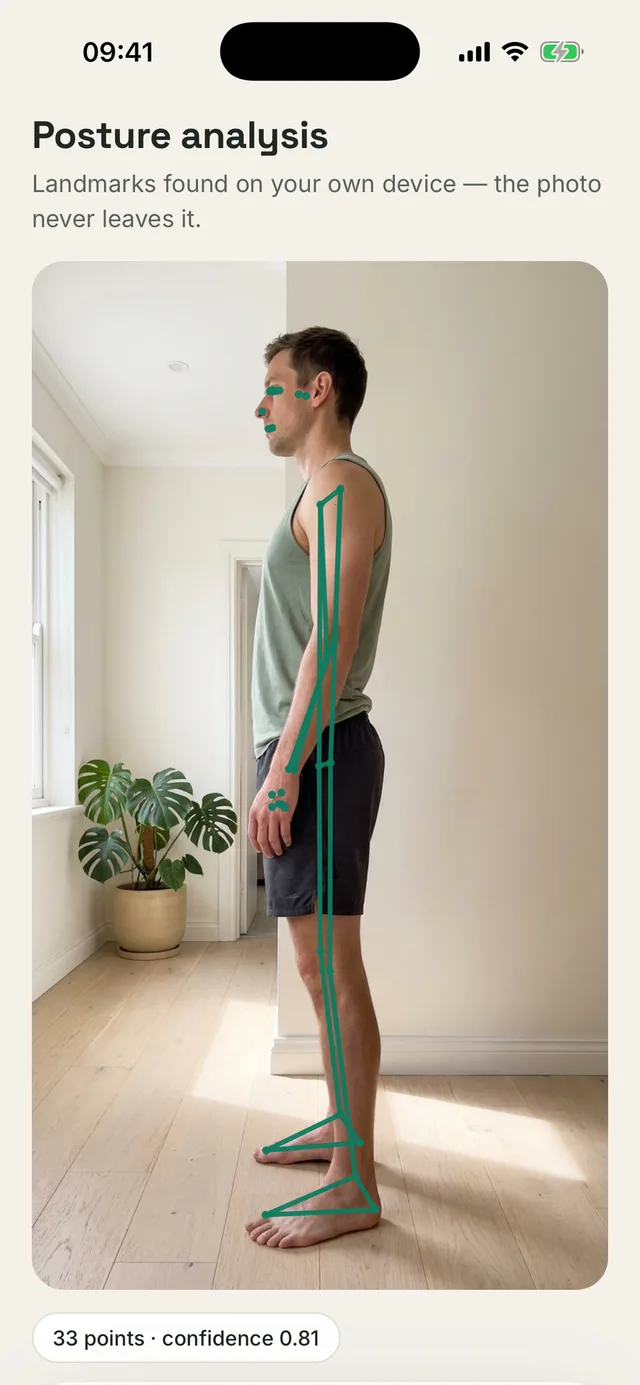
Kallen app screen: a side-on photo with 33 pose landmarks drawn over it and a confidence reading

Posture analysis · side